Journal of Chemistry Letters

Journal of Chemistry Letters


Facts and figures
h-index 15
Citations 629
i10-index 19
Number of Volumes 6
Number of Issues 24
Issues per Year 4
Number of Published Articles 153
Acceptance Rate %60
Reject Rate %40
Article View 128,257
View Per Article 838.28
PDF Download 150,180
PDF Download Per Article 981.57
Number of Indexing Databases 9
Number of Reviewers  1
5
50
Number of Contributors 418
Time to Accept (Weeks) 8
Number of Editorial Board Members 43

Journal of Chemistry Letters (J. Chem.  Lett.) ISSN (online) 2717-1892 ISSN (print) 2821-0123 is an Open Access and double blind peer-reviewed journal focused on rapidly publishing innovative new findings in all aspects of chemistry. All articles published by the journal are available for free under a Creative Commons license CC-BY 4.0.
The journal publishes both reviews, which help researchers understand the state of science on important chemistry topics and letters that concisely communicate the most interesting results.

  • Available from: January 2020
  • Acceptance Rate: 60%
  • Frequency: 4 per year (quarterly)
  • Publication Dates: Per month
  • Publication Charge: There is a fee for the journal costs. Please visit the "Guide for Authors".
  • Language: English
  • Scope: All fields of chemistry
  • Type of papers: Review, letters and research work
  • Open Access: Yes
  • review process: Double-blind peer review process
  • Average time to first decision: 1 month
  • All articles are free to read, copy, distribute, and use (with attribution)
  • The author retains copyright - not the publisher
  • Complies with self-archiving mandates

All submitted manuscripts are checked for similarity through a trustworthy software named iThenticate to be assured about its originality and then rigorously peer-reviewed by international reviewers. 

To see the Acceptance timeline Please follow the link below:

Acceptance Timeline Diagram


Current Issue: Volume 6, Issue 4, November and December 2025 

Synthesis and DFT-guided evaluation of PPy-ZnFe₂O₄@Fe₃O₄ nanocomposite for pharmaceutical adsorption

Pages 240-255

10.22034/jchemlett.2025.554966.1361

Rebaz Anwar Omer, Yousif Hussein Azeeza, Hani K. I. Sultan, Hani K. Ismail, Ahmad F. Hamasdiq, Rebaz Obaid Kareem
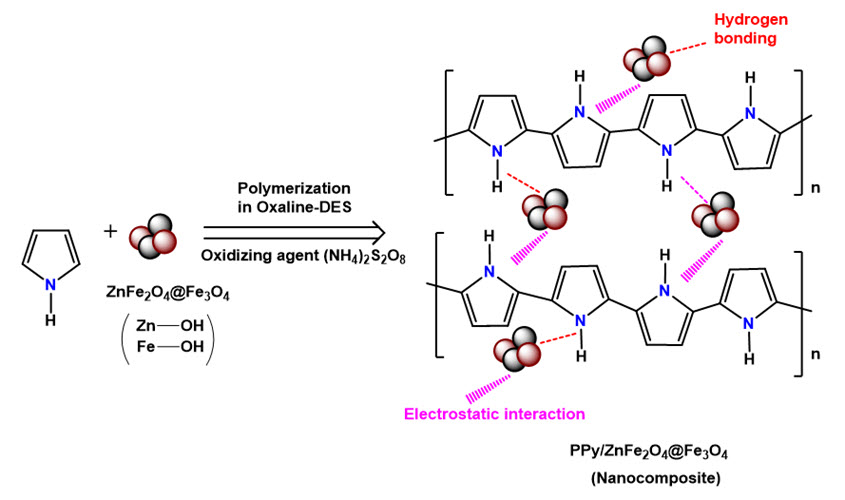
Synthesis and DFT-guided evaluation of PPy-ZnFe₂O₄@Fe₃O₄ nanocomposite for pharmaceutical adsorption

Keywords Cloud

  • Adsorption
  • DFT
  • Density functional theory
  • Environment
  • antibacterial
  • Kinetics
  • heavy metals
  • Docking
  • fullerene (C20)
  • Experimental Design
  • Phytochemical
  • Precipitation
  • Soil
  • Physical Adsorption
  • Modeling
  • optimization
  • Groundwater
  • Wastewater Treatment
  • Spectroscopy
  • Cancer risk
  • Isotherm
  • Hydrothermal method
  • Molecular Dynamic Simulation
  • XRD
  • Density functional theory (DFT)
  • Essential oil
  • Extraction
  • Spectrophotometry
  • Molecular docking
  • Drug-likeness
  • Carbon dioxide
  • QSAR
  • Polymer
  • Viscosity
  • Tricyclic antidepressants
  • Risk Assessment
  • Nanocomposite
  • 1
  • applications
  • Synthesis
  • Biodiesel
  • 3D Printing
  • Antifungal
  • Heavy metal
  • Antimicrobial
  • Co-precipitation
  • Schiff base
  • plants
  • Ge3N4
  • Natural gas
  • Military applications
  • pharmacokinetic
  • hazard
  • Rylene diimides
  • Metallic nanoparticle
  • Cytotoxicity
  • Opuntia fragalis
  • skimmianine
  • Collision frequency
  • Zinc oxide nanoparticles
  • Sodium trisulfide
  • Steel Cord
  • Turbidity
  • black powder
  • interface
  • Energy Storage
  • transducer
  • N-hydroxyimides aldehydes
  • chrysanthenyl acetate
  • organic cathode
  • FT-IR
  • Greenhouse Gases
  • Bis(indolyl)methane
  • fluorine compound
  • Protective coatings
  • Rain
  • Green catalyst
  • Tissue engineering
  • Chromatography. Structure
  • Conductometry
  • Pickering miniemulsion
  • Crystallinity
  • Genetic function algorithm
  • MgZnO/rGO
  • cancer
  • Vinasse
  • Charge density
  • zinc
  • Aziridination
  • Brass
  • DES
  • Organocatalyst
  • Vegetables
  • Norfloxacin
  • antioxidants
  • Asymmetric synthesis
  • brine -Rock interaction
  • binding scores
  • Zinc complexes
  • Copper complexes
  • Density
  • Al12P12 nano-cages
  • Green Synthes
  • sulphuric acid
  • Concordant correlation coefficient (CCC)
  • acidity
  • Electrosynthesis
  • River Red Gum
  • Freundlich
  • Fines migration
  • density functional theory calculations
  • gabapentin
  • rheological behavior
  • Staphylococcus aureus
  • Polypyrrole nanocomposite
  • Acacia nilotica
  • Ethanol
  • CO2 fixation
  • Chromatography Mass Spectroscopy
  • Sedimentation
  • benzoquinone
  • pH effects
  • Renewable Energy
  • Chinese Spinach
  • Structural
  • Tetrazoles
  • Ag amount
  • bimethane production potential
  • dicarboxylation
  • Zinc ferrite
  • Dynamic Light Scattering
  • Vinyl ester
  • Controlled Synthesis
  • Electrochemical sensor
  • clarifier
  • UV-Vis spectroscopy
  • Literature Survey
  • microwave heating
  • spectrophotometric assay
  • Polyamides fabrics
  • Central composite design
  • Cross-dehydrogenative coupling
  • CoMFA: molecular docking
  • Energy - modeling
  • Stability evaluation
  • bioprinting
  • Dicyanomethylene
  • Glycine Amino Acid
  • medicinal plants
  • oxidation-filtration
  • Antibacterial Activity
  • Thermodynamic
  • ADMET
  • Hazard Quotient
  • Optical properties
  • Boron Nitride
  • Catalyst
  • Nanofluid
  • Molecular Descriptors
  • Monoalkyl ester
  • pseudo-second-order model
  • polyethylene
  • Ascorbic acid (AA), Solid-phase extraction (SPE), Spectrophotometery
  • pure form
  • Total Suspended Solids (TSS)
  • Fenton’s Reagent
  • Biodegradable
  • solid phase microextraction fiber
  • Modelling Studies
  • Hydrogen energy
  • Free fatty acids
  • 19 Drug design World Health Organization (WHO)
  • magnetic sand
  • Microwave irradiation
  • Sarkhun gas field
  • Tyrosine kinase
  • Rapid prototyping
  • Firewood
  • Quantitative structure-activity relationships
  • Road Traffic
  • Pharmaceutical consituents
  • Simultaneous determination
  • In-silico
  • Bidentate
  • Benzaldehydes
  • oxadiazole
  • Drugs Molecular Docking
  • Zirconia
  • recyclable catalysts and solvents
  • Isotherms
  • Zn
  • WHO
  • Dinitrogen monoxide
  • yttrium aluminium silicate
  • MLR
  • multi-target antidiabetic agents
  • Metallized acid dyes
  • Sulfadiazine
  • Active site
  • Gas Separation

Related Journals